
Why Burnout Leaves You Feeling Stuck: Functional Freeze & Nervous System Stress | McKinney, TX
When Anxiety Becomes Exhaustion

There comes a point for many people when anxiety no longer feels the way they expect it to. The racing thoughts may become less obvious. The constant urgency may fade. The feeling of always being “on” may shift into something quieter, but not necessarily easier. Instead, life begins to feel heavier. Getting through ordinary responsibilities requires more effort than it once did. Work still gets completed. Families are cared for. Appointments are kept. Messages are answered. From the outside, everything may appear stable. Internally, however, many people describe feeling as though they are operating with limited energy. They may struggle to concentrate, feel emotionally distant from people they love, or notice that activities that once brought joy no longer feel as accessible.
Many people initially describe this experience as burnout. Others wonder if they are becoming depressed. Some begin questioning whether they have lost their motivation, discipline, or ability to handle life the way they used to. A growing number of therapists use the term functional freeze to describe this pattern. Although functional freeze is not a formal mental health diagnosis, it is a clinical concept that can help explain what happens when a person continues functioning while their nervous system becomes increasingly shaped by prolonged stress, anxiety, or unresolved experiences.
For adults seeking anxiety therapy in McKinney, Texas, this experience is often one of the reasons they reach out for support. They are not necessarily in crisis. They are often people who have spent years being responsible, capable, and dependable—but something has changed. They no longer feel fully present in their own lives. Understanding what is happening within the nervous system can provide a different way of looking at these experiences.
Functional Freeze
When the Nervous System Adapts to Prolonged Stress
The nervous system is designed to help us respond to challenges. When we encounter a stressful situation, the brain and body coordinate a series of responses that increase alertness, mobilize energy, and help us respond effectively. This stress response is not a problem in itself. In fact, it is one of the reasons humans are able to adapt, survive, and overcome difficult circumstances. The challenge occurs when the nervous system is repeatedly asked to respond to stress without enough opportunity for recovery. A person may experience chronic workplace pressure, ongoing relationship difficulties, caregiving demands, financial uncertainty, perfectionism, or the lingering effects of traumatic experiences. Over time, the body begins adapting to a sustained level of demand.
Functional freeze can develop within this context. Rather than feeling constantly activated, some people experience a reduction in emotional energy and engagement. They continue meeting responsibilities, but internally they may feel disconnected, depleted, or as though they are moving through life automatically. This is why functional freeze can be difficult to recognize. It often does not look like someone who has stopped functioning. It often looks like someone who is functioning at a significant personal cost.
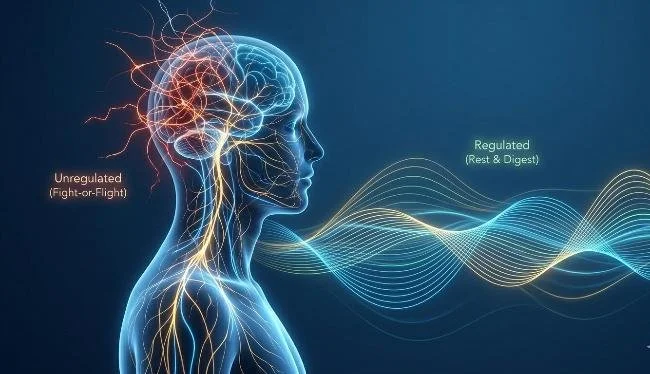
When Competence Begins to Feel Exhausting
Consider someone like Sarah. Sarah is a project manager in her forties who has always been viewed as reliable and organized. She is the person colleagues call when something needs to be handled. She manages deadlines, solves problems quickly, and has built much of her identity around being someone others can count on. Over the past year, however, Sarah noticed subtle changes. Tasks that once felt easy began requiring tremendous effort. She would sit at her computer knowing exactly what needed to be done but feeling unable to begin. She still met expectations, but everything seemed to require more mental energy than before. By the end of the workday, she had very little left for herself. Weekends became a time to recover rather than a time to connect, explore, or enjoy life. Sarah began wondering if she had become lazy or unmotivated.
From the outside, it might appear that Sarah simply needed better time management or more discipline. From a nervous system perspective, however, a different explanation may be worth considering. After years of sustained stress, the brain and body may begin prioritizing energy conservation. The issue is not that a person has lost their capability. Rather, their system may be allocating resources differently after prolonged periods of demand. This distinction matters because many people experiencing functional freeze spend years criticizing themselves for symptoms that are actually signs of exhaustion and adaptation.
The Biology of Chronic Stress: Understanding Allostatic Load
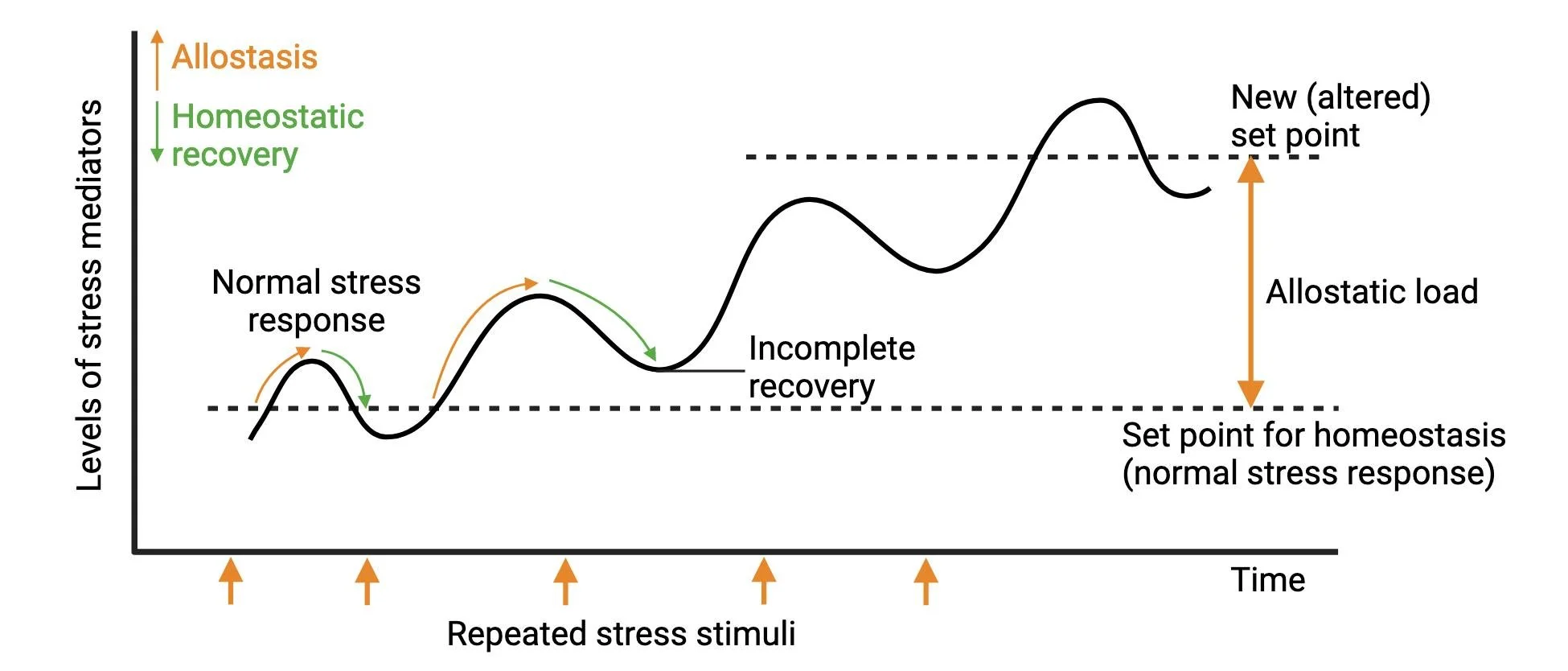
Allostatic load refers to the cumulative physiological burden that develops when the body repeatedly adapts to ongoing stress. Over time, chronic activation of stress systems can influence energy, concentration, emotional regulation, and the ability to recover.
The human body is remarkably adaptable. When stress is temporary, the body responds by increasing resources needed to handle the situation. The heart rate may increase, attention becomes sharper, and stress hormones such as cortisol and adrenaline help mobilize energy. Once the challenge passes, the nervous system is designed to return toward balance. However, when stress becomes chronic, the body must repeatedly adjust.
Researchers use the term allostatic load to describe the cumulative wear and tear that can occur when the body is continually adapting to ongoing demands. It reflects the physiological cost of maintaining balance under prolonged stress. Allostatic load does not mean the body is failing. It means the body has been working continuously to adapt. Over time, this ongoing demand can influence many areas of functioning, including concentration, emotional regulation, sleep, energy levels, and the ability to recover after stressful experiences. This helps explain why someone may say: “I know I should be able to handle this, but I feel completely drained.” The exhaustion is not always a reflection of how much someone is doing in a single moment. Sometimes it reflects how long the nervous system has been working without adequate recovery.
Why Chronic Anxiety Can Eventually Feel Like Shutdown
Many people understand anxiety as feeling worried, restless, or unable to calm down. Those experiences are common, but anxiety does not always remain in an obvious state of activation. When stress continues for long periods, some people notice a shift. The intense worry may lessen, but they begin experiencing fatigue, emotional numbness, difficulty making decisions, and a sense of disconnection from themselves. The body’s primary stress regulation system—the hypothalamic-pituitary-adrenal (HPA) axis, plays an important role in coordinating responses to stress.
This system helps the body respond when demands arise. However, prolonged activation can affect how efficiently the body moves between states of alertness and recovery. In practical terms, a person may feel as though their internal system has become less flexible. They may still respond to emergencies when necessary, but everyday life begins requiring more effort. Small decisions feel exhausting. Social connection feels harder. Activities that once felt restorative no longer provide the same sense of renewal. This is one reason functional freeze can feel confusing. A person may think: “Why am I exhausted if I’m not even anxious anymore?” The answer often lies in understanding that chronic stress does not only create activation. Over time, it can also contribute to depletion and reduced emotional engagement.
Emotional Shutdown, EMDR, Neuroplasticity, and Recovery
One of the most difficult parts of functional freeze is that many people cannot immediately explain what has changed. They know they are tired, but it does not feel like ordinary tiredness. They may still be completing responsibilities, showing up for others, and maintaining their routines, yet something feels different internally. Many describe feeling as though they are present in their lives but not fully connected to them.
This experience can appear in several ways. Some people notice that emotions feel less accessible. They may recognize that they love their family, value their relationships, or appreciate their accomplishments, yet they feel unable to fully experience those emotions in the way they once did. Others notice changes in their thinking. They may struggle to focus, make decisions, or access the creativity and problem-solving abilities they previously relied on. A person who was once quick to make decisions may find themselves overwhelmed by simple choices, such as responding to an email, planning dinner, or organizing their schedule.
These changes can be especially distressing for high-functioning individuals because their identity is often connected to competence. They may interpret these experiences as personal failure rather than recognizing them as possible signs that their nervous system has been under significant strain.
Emily’s Story: “Why Are Simple Things Suddenly So Hard?”
Emily came to therapy because she was frustrated with herself. She described herself as someone who had always been able to handle a lot. She managed her career, cared for her family, and was typically the person others turned to when something needed to get done. Recently, however, she noticed that small decisions felt disproportionately difficult. Choosing what to make for dinner felt exhausting. Answering routine messages felt overwhelming. She would sit down at the end of the day knowing there were things she wanted to accomplish but feeling unable to access the energy required to start. Emily worried that she was becoming less capable.
What she did not initially recognize was how much mental and emotional energy her brain had been using to manage prolonged stress. Chronic stress can influence the relationship between areas of the brain involved in threat detection, emotional regulation, memory, and decision-making. When the brain is continuously prioritizing the detection and management of stress, fewer resources may be available for tasks that require flexibility, creativity, and sustained attention. This does not mean a person’s abilities have disappeared. It means their system may be operating under different demands.
The Brain Under Stress: Why Focus and Decision-Making Can Change
The brain is constantly evaluating information from both the internal and external environment. A structure called the amygdala plays an important role in detecting potential threats and helping the brain respond quickly when something feels unsafe or demanding. This system is essential for survival. Without it, humans would not be able to respond effectively to danger. However, when stress becomes prolonged, the brain can become increasingly focused on managing perceived demands. At the same time, areas involved in planning, perspective-taking, and decision-making—such as the prefrontal cortex—may have fewer resources available when the nervous system is under chronic strain. This helps explain why someone experiencing burnout or functional freeze may think: “I know what I need to do. I just cannot seem to make myself do it.” The difficulty is not necessarily a lack of motivation. Sometimes the brain is working hard behind the scenes to manage stress, leaving less capacity available for everyday cognitive demands.
Why Rest Does Not Always Resolve Functional Freeze
One of the most frustrating experiences for people living with chronic stress is that rest does not always create the relief they expect. A lot of people try to fix exhaustion by sleeping more, taking vacations, reducing responsibilities, or stepping away from stressful situations. These things can absolutely be helpful. However, when the nervous system has adapted to prolonged stress, physical rest alone may not address the deeper patterns contributing to exhaustion. There is a difference between being physically tired after a demanding week and feeling depleted because the brain and body have been operating under ongoing stress for months or years. A person can spend an entire weekend resting and still wake up Monday morning feeling as though they never truly recovered. This is often because recovery involves more than stopping activity. It involves restoring flexibility within the nervous system and helping the brain recognize that it is no longer required to remain organized around past or ongoing stress.
The Role of Safety and Nervous System Regulation

One influential framework for understanding nervous system states is Polyvagal Theory, developed by Dr. Stephen Porges. While aspects of Polyvagal Theory continue to be explored and debated within the scientific community, it has influenced many clinicians' understanding of how the nervous system responds to experiences of safety, connection, and threat. From this perspective, humans are not simply responding to what is happening in the present moment. The nervous system is also influenced by previous experiences and learned patterns of response. When someone has lived through prolonged stress or overwhelming experiences, the nervous system may become more likely to respond based on previous patterns rather than the current situation alone. This is one reason why someone may logically understand that they are safe while still feeling tense, overwhelmed, emotionally distant, or unable to relax. The thinking part of the brain may understand one thing while the deeper survival systems are responding differently.
This is where trauma-informed therapy approaches can be especially valuable.
How EMDR Therapy Supports Recovery From Chronic Stress Patterns
Many people first hear about Eye Movement Desensitization and Reprocessing (EMDR) therapy in relation to PTSD. While EMDR is a well-established treatment for trauma-related symptoms, its applications extend beyond single traumatic events. Many people who struggle with chronic anxiety, burnout, emotional exhaustion, or nervous system dysregulation have experienced situations that shaped the way their brain responds to stress. These experiences may include obvious traumatic events, but they may also involve repeated experiences of feeling overwhelmed, unsupported, unsafe, responsible for too much, or unable to process what was happening at the time. The Adaptive Information Processing model, which guides EMDR therapy, proposes that distressing experiences can sometimes remain insufficiently processed and continue influencing present-day thoughts, emotions, physical sensations, and beliefs.
For example, someone who spent years feeling responsible for keeping everything together may continue carrying the belief: “I have to handle everything.” Someone who experienced repeated criticism may continue feeling: “I am not doing enough.” Someone who experienced unpredictable environments may continue responding as though they must always be prepared for the next problem. These responses are not simply conscious choices. They are patterns that became established through experience. EMDR therapy helps support the brain’s natural ability to process and integrate these experiences. Through carefully structured phases of treatment, clients work with distressing memories, beliefs, and emotional responses so that the past has less influence over the present. Many people describe the changes as gradual but meaningful. They may notice that stressful situations no longer create the same intensity of reaction. They may feel more emotionally available, more connected to themselves, and more capable of responding rather than simply enduring.
Neuroplasticity: The Brain’s Capacity for Change
One of the most encouraging discoveries in neuroscience is that the brain remains capable of change throughout life. This ability, known as neuroplasticity, refers to the brain’s capacity to adapt based on experiences, learning, relationships, and repeated patterns. The nervous system is not permanently fixed in the state it developed during periods of stress. With the right conditions, new patterns can develop. Therapy supports this process by creating opportunities for new experiences of understanding, regulation, connection, and emotional processing.
For someone experiencing functional freeze, this may mean gradually rebuilding access to emotions that felt distant, strengthening the ability to tolerate stress without becoming overwhelmed, and developing a greater sense of flexibility in daily life. Recovery is often not a dramatic overnight change. More commonly, people begin noticing small shifts. They realize they are enjoying conversations again. They notice that decisions feel less exhausting. They find themselves responding differently to situations that once felt overwhelming. Eventually, many people recognize that life requires less effort than it once did.
Seeking Support for Functional Freeze, Burnout, and Anxiety in McKinney, Texas
Functional freeze often develops slowly. Many people do not recognize what is happening until they reach a point where their usual coping strategies no longer feel effective. They may have spent years pushing through challenges, meeting expectations, and caring for others while gradually becoming disconnected from themselves. At Acadia Psychotherapy & Associates in McKinney, Texas, we work with adults experiencing anxiety, burnout, chronic stress, trauma, and emotional exhaustion. Our approach combines evidence-based therapies, including EMDR therapy, with a deeper understanding of how the nervous system responds to overwhelming experiences.
Therapy is not simply about identifying what is wrong. It is about understanding the patterns that developed for a reason and creating the conditions for meaningful change. If you are searching for EMDR therapy in McKinney, Texas, or support for anxiety, burnout, trauma recovery, or nervous system regulation, Acadia Psychotherapy & Associates provides compassionate, evidence-informed therapy for adults seeking greater clarity, connection, and emotional flexibility.
Frequently Asked Questions About Functional Freeze
Is functional freeze a diagnosis?
Functional freeze is not a formal mental health diagnosis listed in the Diagnostic and Statistical Manual of Mental Disorders (DSM-5-TR). Instead, therapists often use the term to describe patterns of emotional shutdown, exhaustion, and reduced engagement that may occur after prolonged stress, anxiety, or overwhelming experiences.
Why do I feel exhausted when I am not doing anything stressful?
Feeling exhausted despite having fewer demands can occur when the nervous system has been under prolonged stress. Chronic stress can affect sleep, concentration, emotional regulation, and the body’s ability to return to a restorative state.
Can burnout cause emotional numbness?
Yes. Some people experiencing burnout describe feeling emotionally disconnected, less motivated, or unable to experience the same level of enjoyment they once had. This can occur when prolonged stress affects the brain and nervous system’s ability to regulate emotions.
Can EMDR help with anxiety and burnout?
EMDR therapy can help address distressing experiences, beliefs, and emotional patterns that may contribute to anxiety, trauma responses, and chronic stress. Many clients use EMDR as part of a broader treatment approach for nervous system regulation and emotional healing.
Where can I find EMDR therapy in McKinney, Texas?
Acadia Psychotherapy & Associates provides EMDR therapy in McKinney, Texas, for adults experiencing trauma, anxiety, burnout, chronic stress, and emotional exhaustion.
